What Is GEO (Generative Engine Optimisation) and Why Should Every UK Small Business Care in 2026?
Published by Clicka | goclicka.com | Scunthorpe, North Lincolnshire
A year ago, most small business owners had never heard of GEO. Today, it's quietly becoming the thing that separates businesses getting found online from businesses wondering why their website traffic has started drifting in the wrong direction.
This isn't another piece of digital marketing jargon invented to make agencies sound clever. GEO is a real shift in how people search for things — and if you run a business in the UK right now, it's worth ten minutes of your time to understand what it actually means.
What GEO actually is
Generative Engine Optimisation — GEO — is the practice of making sure your business shows up when AI tools answer questions on someone's behalf.
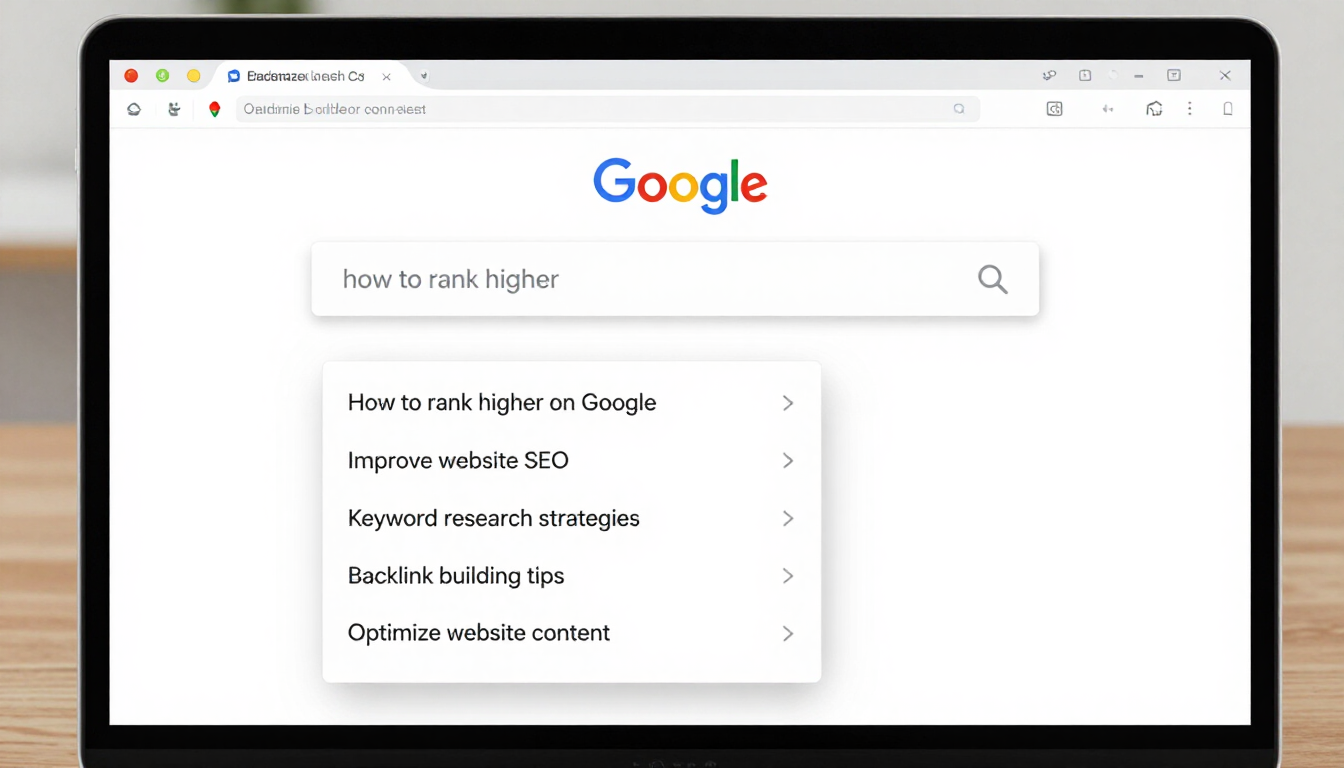
You already know what SEO is, even if you'd rather not think about it. It's the reason some businesses appear at the top of Google and others don't. GEO is the same idea, but applied to a different layer of search that's grown enormously over the last eighteen months.
When someone types a question into ChatGPT, asks Google's AI Overview, or uses Perplexity, they're not clicking through ten blue links and deciding which website to visit. They're reading an AI-generated answer that pulls information from across the web and presents it as a single, confident response. Sometimes that answer mentions specific businesses. Sometimes it recommends local services. Sometimes it describes exactly the kind of thing your business does — without once sending the person to your website.
If your business is part of that answer, that's visibility you didn't have to pay for. If your competitor is part of that answer and you're not, that's business quietly leaving through the back door.
That's what GEO is about.
How is GEO different from SEO?
They're related but they're not the same thing, and conflating them leads to wasted effort.
SEO is primarily about rankings — getting your website to appear as high as possible in a list of search results. The measure of success is fairly concrete: position one, page one, click-through rate, organic traffic.
GEO is about citation. When an AI synthesises an answer, it doesn't rank ten options and let the user choose. It picks what it considers the most credible, clearly-structured, trustworthy information and presents it as the answer. Your goal isn't to appear on a list — it's to be what the AI reaches for.
The good news is that GEO and SEO share a lot of the same foundations. Good content, clear writing, genuine expertise, a well-structured website — these things help with both. But GEO rewards specific behaviours that traditional SEO doesn't always prioritise, and understanding the difference is where most businesses are currently falling short.
What AI tools are actually looking for
This is the practical bit. When an AI search tool is deciding which sources to pull from, it's broadly asking three things.
Is this content genuinely useful, or is it filler? AI systems are quite good at identifying content that exists purely to rank for keywords versus content that actually answers a question someone would ask in real life. A page on your website that says "we are a leading provider of high-quality web design solutions in the Scunthorpe area" tells a search engine almost nothing. A page that explains what a website redesign costs, what the process involves, and what questions to ask before choosing an agency — that's content worth citing.
Is the source credible? Credibility in this context means a few things. It means being mentioned elsewhere online — in directories, in local press, in industry listings. It means having consistent information about your business across the web (your name, address, phone number matching everywhere). It means having real reviews and a real presence, not just a website that exists in isolation.
Is the content structured in a way that's easy to parse? AI tools read content the same way a very fast, very methodical human would. Clear headings. Direct answers near the top of the page. Questions answered, not danced around. Short paragraphs that make one point and move on. A website built around this kind of structure is far more likely to be cited than one with long, unbroken walls of text or vague marketing language.
A real example of how this plays out
Say you run a plumbing business in Scunthorpe. Someone in Brigg asks ChatGPT: "Is there a reliable local plumber near Scunthorpe who handles emergency callouts?"
ChatGPT doesn't run a Google search and show the person a map. It draws on information it has about local businesses — from review platforms, directories, local websites, and any indexed content it can find. If your website has a page that clearly states your coverage area, your response times, what an emergency callout involves and how to prepare for one, and you've got consistent reviews across Google and Checkatrade — there's a meaningful chance your business name appears in that answer.
If your website is a four-page brochure with a phone number and a stock photo of some pipes, you won't be anywhere near it.
The gap between those two outcomes is GEO. And it's a gap that's opening up right now, in most local markets, because the majority of small businesses aren't thinking about this yet.
Why this matters more for local businesses than anyone else
National brands and big e-commerce companies have entire teams working on this. But their size also works against them in certain contexts — AI tools, when answering questions with a genuine local dimension, will lean toward local sources because local specificity is part of what makes an answer useful.
"Best digital agency in Scunthorpe" is a question a national agency can't answer better than a local one. "What's the average cost of a new kitchen in North Lincolnshire?" is a question only someone embedded in that market can really answer well.
Local businesses with genuine local knowledge, written up clearly and published consistently, have a structural advantage in GEO that they absolutely should be exploiting. Most aren't.
What you can actually do about it — right now
You don't need to hire a GEO specialist or rebuild your website from scratch. The practical steps are more straightforward than the concept makes them sound.
Write content that answers real questions. Think about the five questions you get asked most often by new enquiries. Write a page or a blog post that answers each one honestly and completely. That's GEO-ready content, and it's also just good content marketing.
Be specific about where you are and what you cover. AI tools use location signals heavily. If your website, your Google Business Profile, and your listings all clearly state that you serve Scunthorpe, Barnetby, Brigg, and the surrounding area — that specificity helps enormously.
Get your presence consistent across the web. Check that your business name, address, and phone number are identical everywhere — your website, Google, Bing Places, Yell, Checkatrade, your local Chamber of Commerce listing, wherever you exist online. Inconsistency creates doubt for AI systems, and doubt means you don't get cited.
Collect and respond to reviews. Not just to look good to humans — reviews are a significant signal of credibility that AI tools pick up on. A business with forty genuine Google reviews and considered responses looks very different from one with two reviews from 2019.
Structure your website content with clear headings and direct answers. If someone asks a question and your page takes three paragraphs to get to the point, that's a problem for GEO. Lead with the answer. Explain it afterwards.
The window of opportunity won't stay open forever
This is worth saying plainly. Right now, in mid-2026, GEO is something most UK small businesses have never heard of. The businesses that act on it over the next twelve to eighteen months will build a citation presence and a content depth that becomes increasingly difficult for late movers to catch up with.
AI search tools learn over time. The sources they trust get cited more, which signals further trust, which leads to more citations. It compounds — exactly the same way that a website which has been publishing quality content for years tends to outrank a site that published the same content last month.
The best time to start is now. The second best time is still well within the next six months.
The bottom line
GEO is what happens when SEO meets the AI-first way people are searching in 2026. It's not a replacement for a good website, good reviews, or good content — it's the layer on top that determines whether all of that work actually gets seen when AI tools are answering your potential customers' questions.
For local businesses in Scunthorpe and across North Lincolnshire, it's one of the most tangible competitive advantages available right now — and most of your competitors haven't started thinking about it yet.
If you want a straight conversation about what GEO looks like for your specific business, we're here for that.
[Find us at goclicka.com]
Clicka is a digital agency based in Scunthorpe, North Lincolnshire. We help local businesses get found, build trust, and grow online — through websites, apps, and the kind of digital strategy that actually makes sense for where you are right now.

Marcos Loureiro
Founder of Clicka
Recent Posts